


Mon-Fri 6 AM - 7 PM


Coventry sits at the heart of a manufacturing cluster that employs over 40,000 people across automotive, aerospace, rail and motorsport – industries where a missing component does not just delay a delivery but can halt an entire production shift. A courier service in Coventry built for this environment responds in hours, not days, collecting from the sender's address and transporting the consignment directly to its destination without intermediate handling.
The consequences of delayed parts here are measured in idle assembly lines and cascading schedule disruptions. A missing wiring harness at a Geely London Taxi station, a batch of composite panels needed at an aerospace subcontractor before a quality-inspection window, or precision tooling required at a motorsport engineering firm ahead of a race weekend – each scenario demands transport that moves on the sender's timeline.
zipmend dispatches a dedicated vehicle for every consignment. You select the vehicle class that matches your shipment during the online booking – from a small van for lightweight instrument packages to a large van with tail lift for palletised components – and receive a fixed price before the driver sets out.
For Coventry's production planners, the value lies in predictability: proactive status updates let them confirm arrival times before committing resources to the next assembly step, turning an urgent dispatch into a scheduled input that slots into the production sequence rather than disrupting it.


The small van is ideal for transporting packages or documents. It has space for up to 2 Europallets. The vehicle can only be loaded from the rear, has no dock height, and no tail lift.
The small van is ideal for transporting packages or documents. It has space for up to 2 Euro pallets. The vehicle can only be loaded from the rear, has no dock height, and no tail lift.
Capacity
Max. shipment weight
up to 400 kg

The medium van is suitable for up to 4 Europallets. The vehicle can only be loaded from the rear, has no dock height, and no tail lift.
The medium van is suitable for up to 4 Euro pallets. The vehicle can only be loaded from the rear, has no dock height, and no tail lift.
Capacity
Max. shipment weight
up to 800 kg

The large van can carry up to 5 euro pallets. The vehicle can only be loaded from the rear and has no dock-height access and no tail lift.
The large van can carry up to 5 euro pallets. The vehicle can only be loaded from the rear and has no dock-height access and no tail lift.
Capacity:
Maximum shipment weight:
up to 1,200 kg
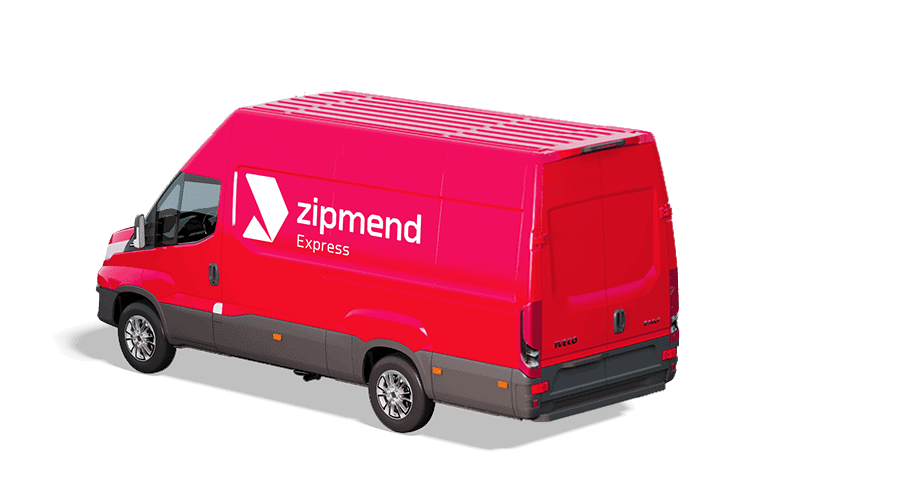
The curtain-side van is suitable for heavy shipments and can carry up to 8 euro pallets. The vehicle can be loaded from the side and from the rear and has no dock-height access and no tail lift.
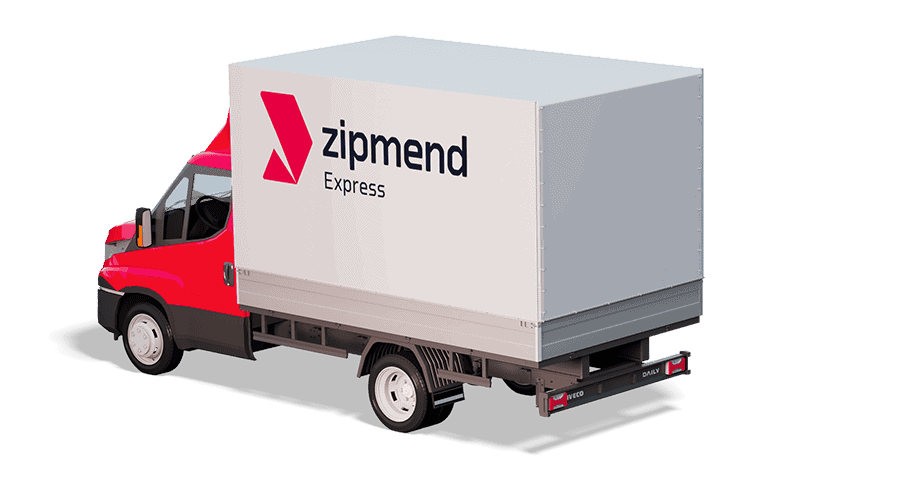
The curtain-side van can carry up to 8 euro pallets. The vehicle can be loaded from the side and from the rear. The vehicle has no dock-height access and no tail lift.
Capacity:
Maximum shipment weight:
up to 1,000 kg
The van with lifting platform is suitable for heavy shipments and can carry up to 8 Europallets. The vehicle can be loaded from the rear, it has no dock height.
The van with tail lift is suitable for heavy shipments and can load up to 8 Europallets. The vehicle can be loaded from the rear, it has no dock height.
Capacity:
per package up to 200 x 150 x 200 cm
Max. shipment weight:
per package up to 500 kg
up to 800kg in total

| Vehicle | Price | Dimensions | Payload |
|---|---|---|---|
| Small van | from 49 € | 2 Europallets 160 x 120 x 120 cm |
Max. 400 kg |
| Mid-Sized van | from 69 € |
4 Europallets 320 x 130 x 160 cm |
Max. 800 kg |
| Large van | from 119 € |
5 Europallets 420 x 135 x 180 cm |
Max. 1,200 kg |
| Curtainside van | from 149 € |
8 Europallets 420 x 210 x 210 cm |
Max. 1,000 kg |
| Tail lift and pallet truck | from 179 € | 8 Europallets 420 x 210 x 210 cm (200 x 150 x 200 cm per package) |
Max. 800 kg (500 kg per package) |

zipmend's transport network is densely represented across the West Midlands, which gives Coventry-based businesses access to short mobilisation times in every direction. Whether a consignment heads toward Birmingham's manufacturing district, the East Midlands logistics hub or London's commercial centres, a suitable vehicle can typically be allocated at short notice.
If you operate across multiple sites or manage just-in-time supply chains, that network density means each shipment gets its own confirmed collection window and delivery schedule – a fixed commitment rather than an open-ended estimate.
A tier-one supplier in Coventry receives a call at seven in the morning: a stamping tool cracked overnight, and the replacement needs to reach a press shop in Birmingham before the first shift changeover. Thirty minutes later, a zipmend driver collects the tool from the factory floor. This kind of scenario – unplanned, high-stakes, measured in production minutes rather than calendar days – defines the courier demand that flows out of Coventry every working day.
Birmingham, barely twenty minutes to the west, is the single largest destination. The two cities share deeply interlinked supply chains: a component manufactured in Coventry might be assembled in Birmingham and dispatched to a customer the same afternoon. Each handover requires transport that arrives at a specific time, not within a vague delivery window – and a dedicated vehicle is the most reliable way to achieve that precision when a production schedule depends on it. The sheer volume of cross-city dispatches means that vehicle availability in the Birmingham–Coventry corridor is consistently high, which translates into shorter wait times between booking and collection.
Leicester, roughly half an hour to the north-east, forms the second major axis. The city’s engineering, textiles and food-processing sectors share suppliers and testing facilities with West Midlands manufacturers, producing a steady stream of samples, tooling and documentation that must arrive the same day. The corridor between the two cities also serves distribution centres and component warehouses that feed Coventry’s factories on a just-in-time basis – meaning even a short delay at one point can ripple through an entire production plan and force costly schedule adjustments downstream.
For a city whose economy runs on precision timing – where production planners schedule assembly steps around confirmed part arrivals and a four-hour delay can cascade into a full shift lost – the ability to dispatch your consignment and track its progress minute by minute is not a service upgrade but a baseline operational requirement. That is the difference between a courier booking and a production input: the vehicle is not just moving goods, it is keeping an assembly line running.


